ARIAT / ZERO-TO-ONE COMMERCE EXPERIENCE
A better way to buy the workwear people already replace together.
Work customers regularly buy the same essentials in multiples. Ariat had no scalable way to package that behavior. I researched the opportunity, designed the system, and worked across four teams to launch it.
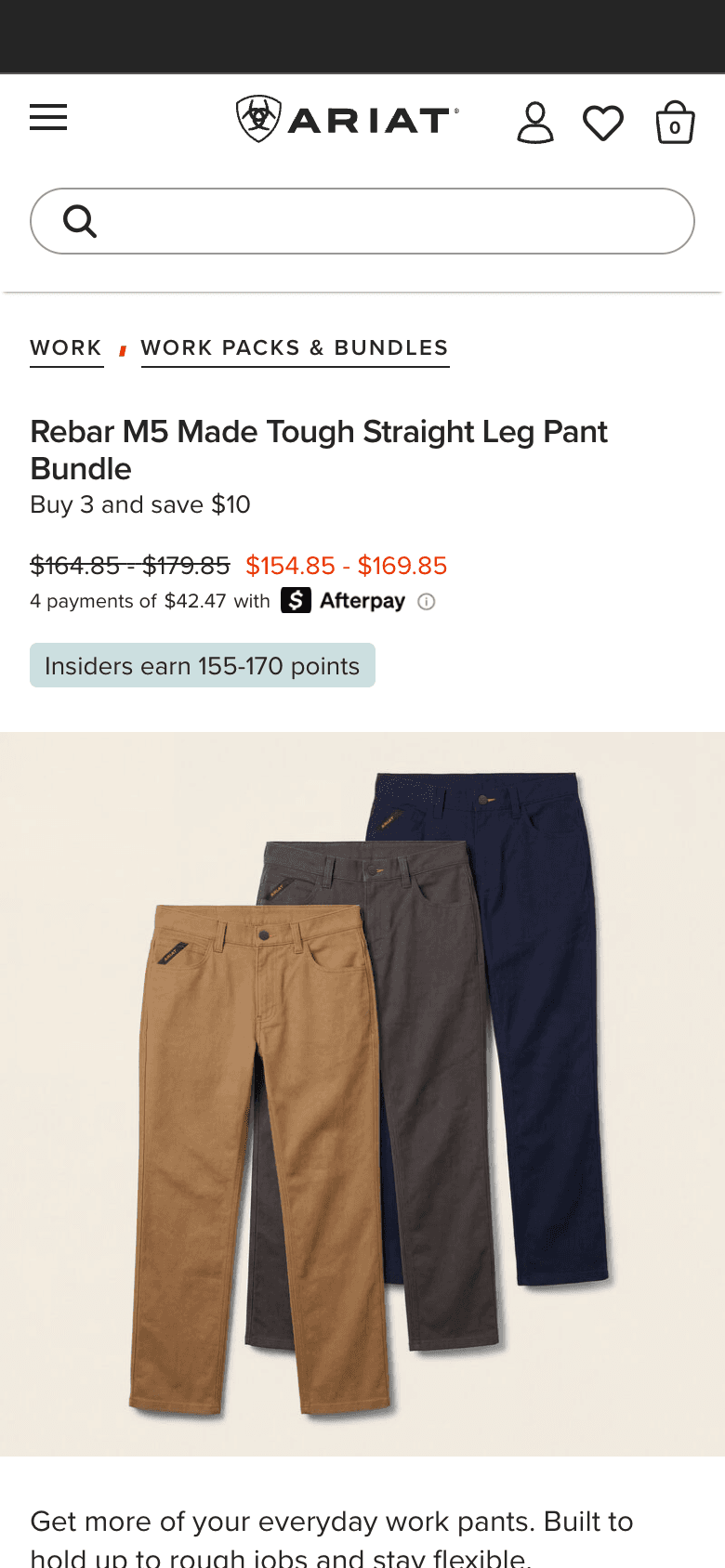
THE LIVE EXPERIENCE / 390PX RETINA CAPTURE
The value is visible before the customer starts making choices.
VIEW LIVE BUNDLES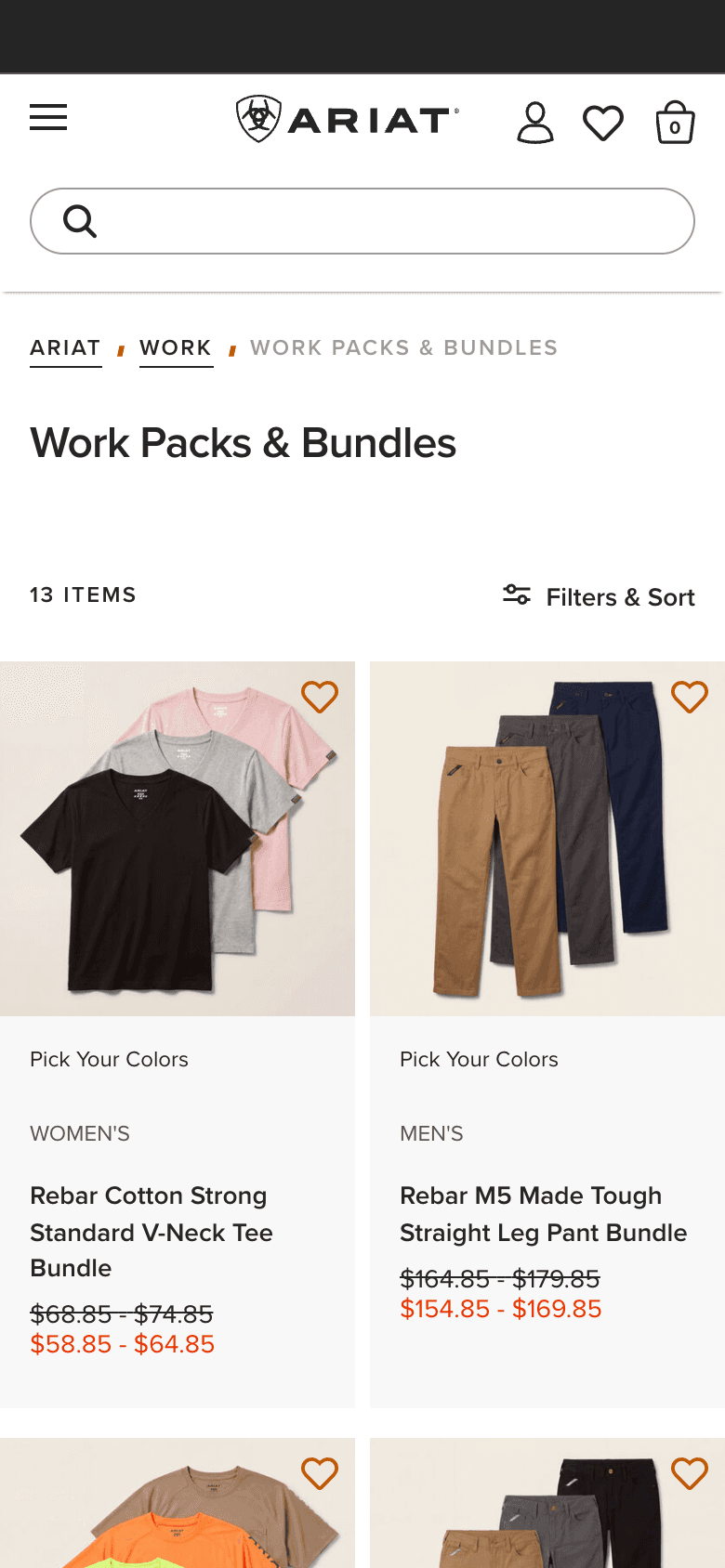
01 / FIND THE RIGHT MODEL
The research narrowed a broad idea into a useful first move.
I did not begin by drawing a bundle page. I first needed to understand which model fit the customer, the category, and the business.
I benchmarked five brands across nine common bundle patterns, then paired that work with a 30-person preference study across Work, Western, and Equestrian customers.
The clearest direction was flexibility. Build-your-own bundles led in Work and Western, while activity-based kits were strongest for Equestrian. Across groups, customers responded to savings they could understand and products that felt relevant to the job.
BRANDS BENCHMARKED
BUNDLE MODELS COMPARED
CUSTOMERS IN PREFERENCE TEST
02 / SYNTHESIZE THE SIGNAL
Give people a useful starting point, then let them choose.
Clear savings, product relevance, and flexibility mattered more than a rigid prebuilt pack. The research gave the team a rule that could work across categories instead of one fixed bundle format.
- 01SIGNAL
One bundle model did not fit every customer.
Work and Western preferred build-your-own flexibility, while Equestrian responded to activity-based kits.
- 02DECISION
Lead with value, then preserve choice.
Give each bundle a clear purpose and savings story without locking shoppers into irrelevant products.
- 03SYSTEM
A flexible model could scale.
The same framework now supports more categories, seasonal campaigns, and new merchandising combinations.
03 / DESIGN THE WHOLE JOURNEY
A bundle is a merchandising system, not a single page.
The work only held together if the promise survived every step. Discovery, value, configuration, and the bag had to behave like one connected experience.
- 01
DISCOVER
Give bundles a clear home in Work and surface them where customers already browse.
- 02
UNDERSTAND
Show the products, total value, and savings before asking for configuration.
- 03
CONFIGURE
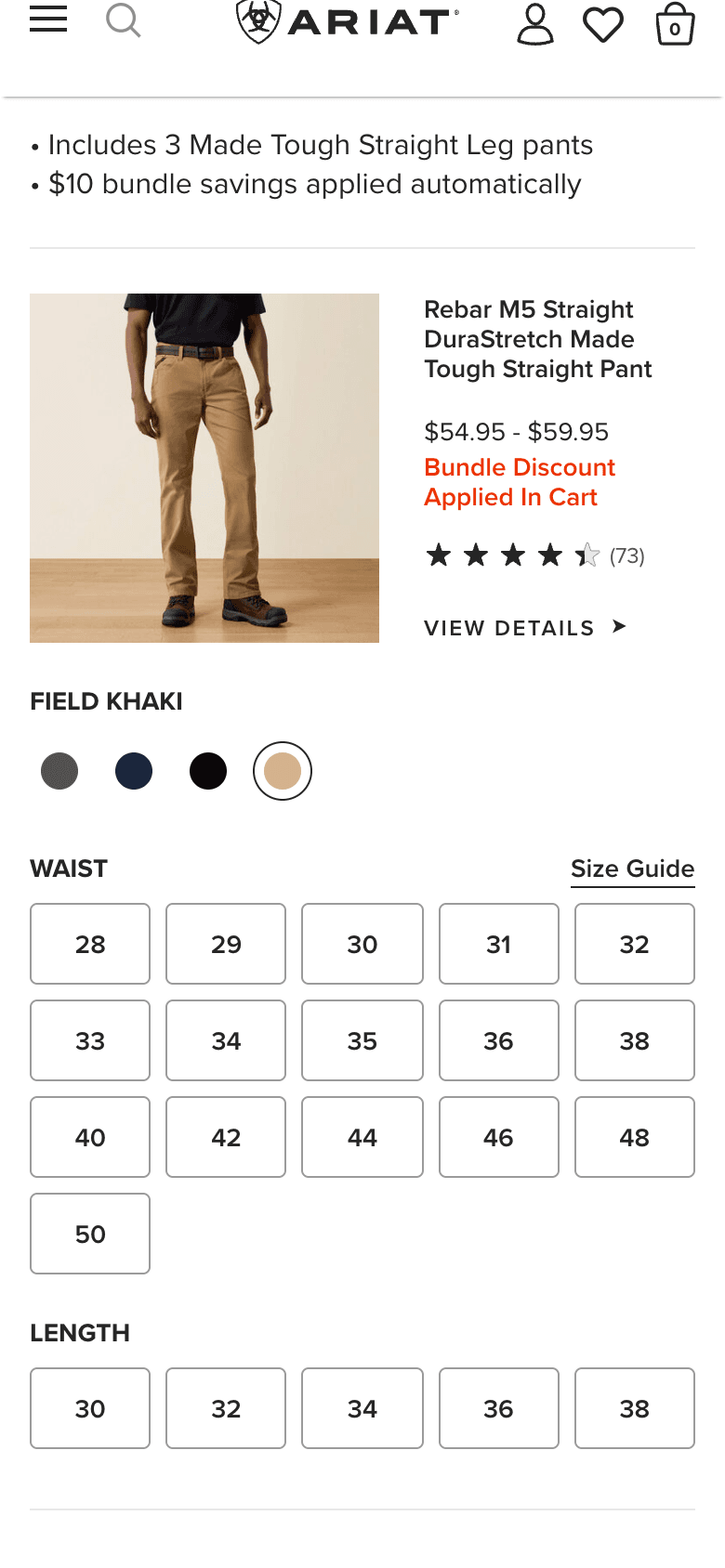
Let every color, waist, and length decision happen inside one guided flow.
- 04
CONFIRM
Carry the discount into the bag so the promise stays visible through purchase.
04 / MAKE THE COMPLEX PART FEEL ROUTINE
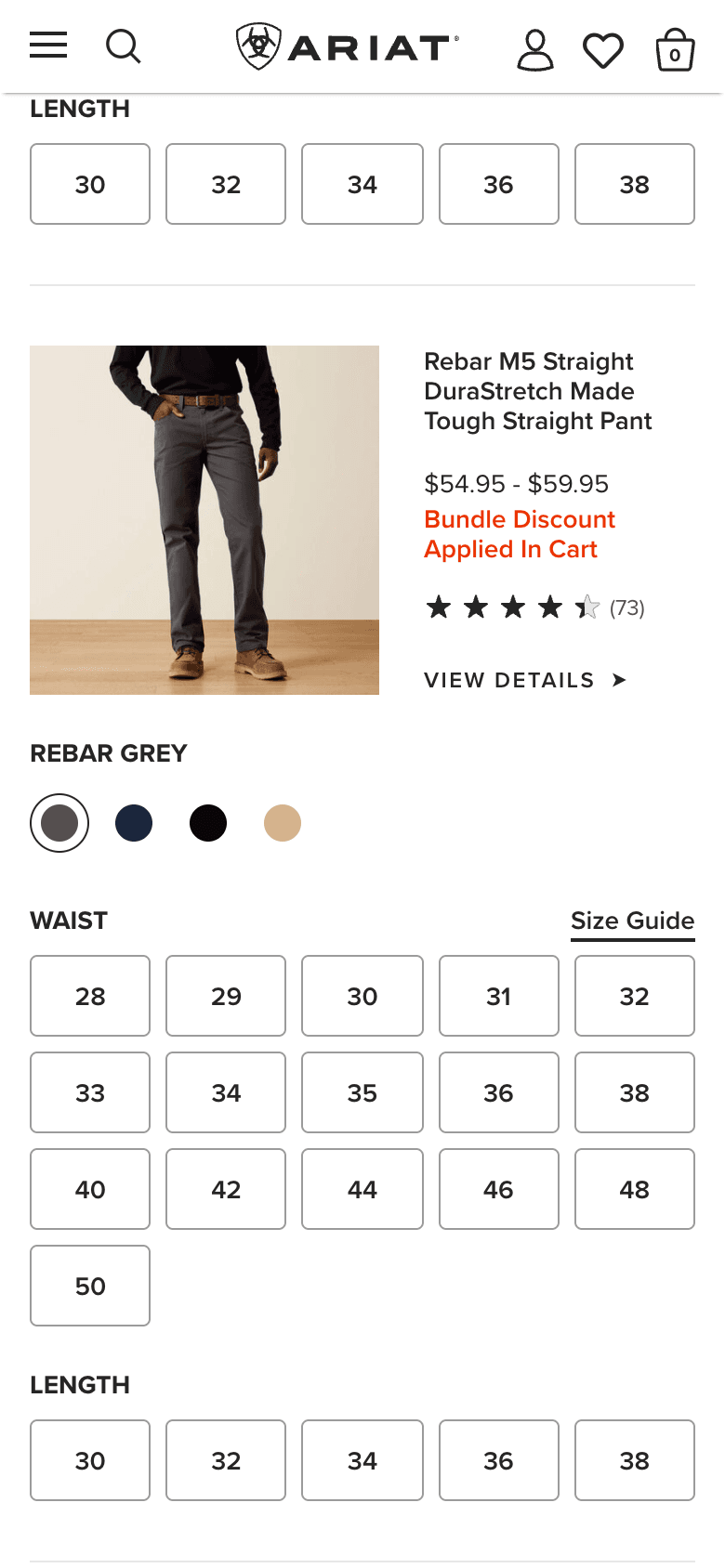
Three products. One guided decision.
The interface had to handle real product complexity without turning the page into a form.
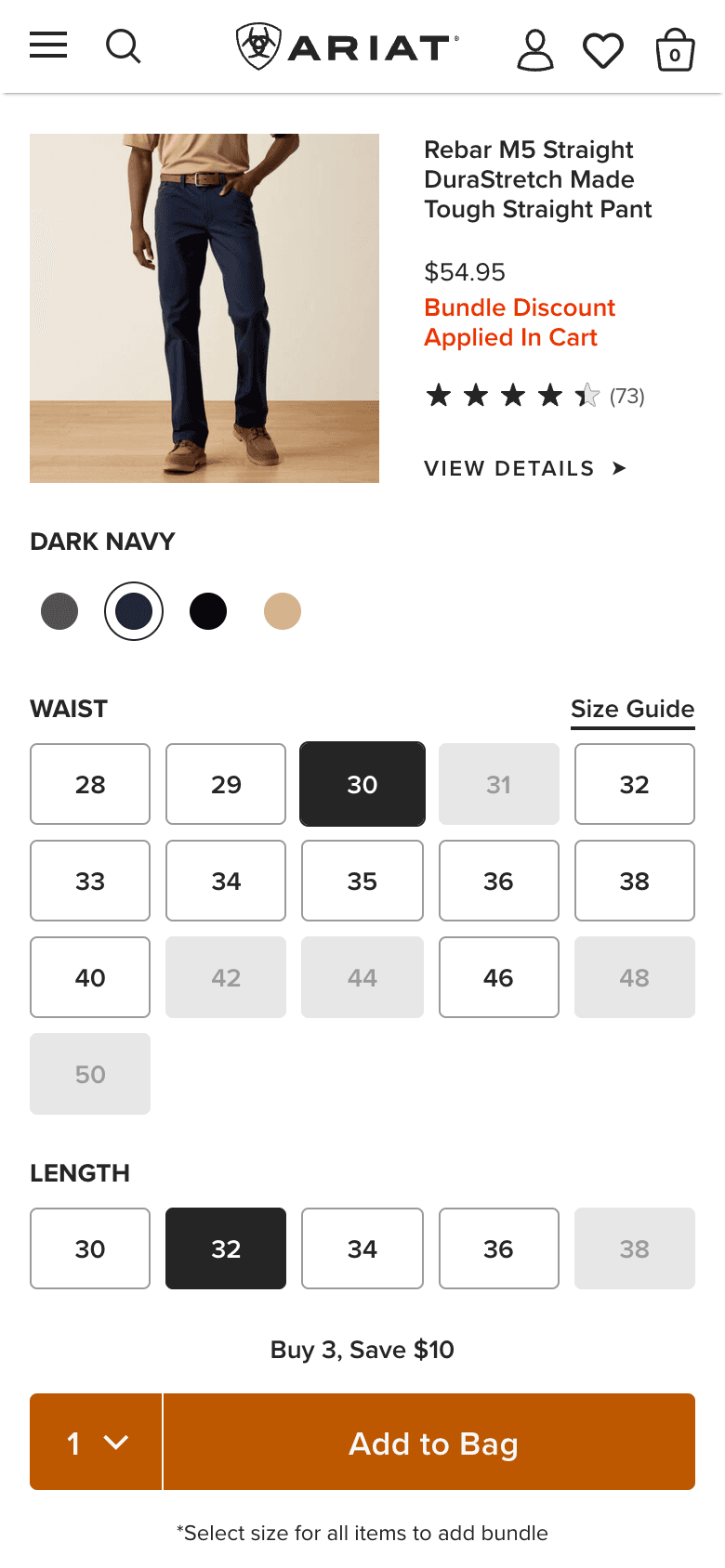
Each item keeps its own image, color, waist, and length controls. The system repeats the same pattern until the bundle is complete, then makes the path to Add to Bag obvious.
05 / KEEP THE PROMISE IN THE BAG
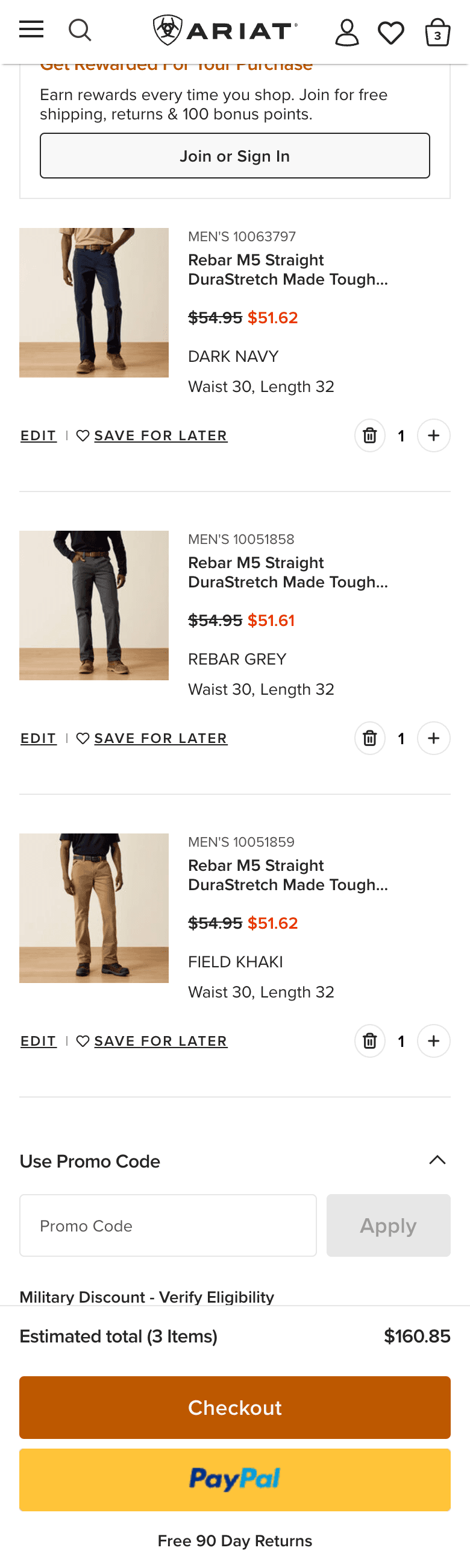
The bundle becomes three real products without losing the savings.
Each selected color and size reaches the bag as its own editable line item. The order summary keeps the three-item total and bundle discount visible, so the customer can verify exactly what they are buying before checkout.
06 / REMOVE A PRODUCTION CONSTRAINT
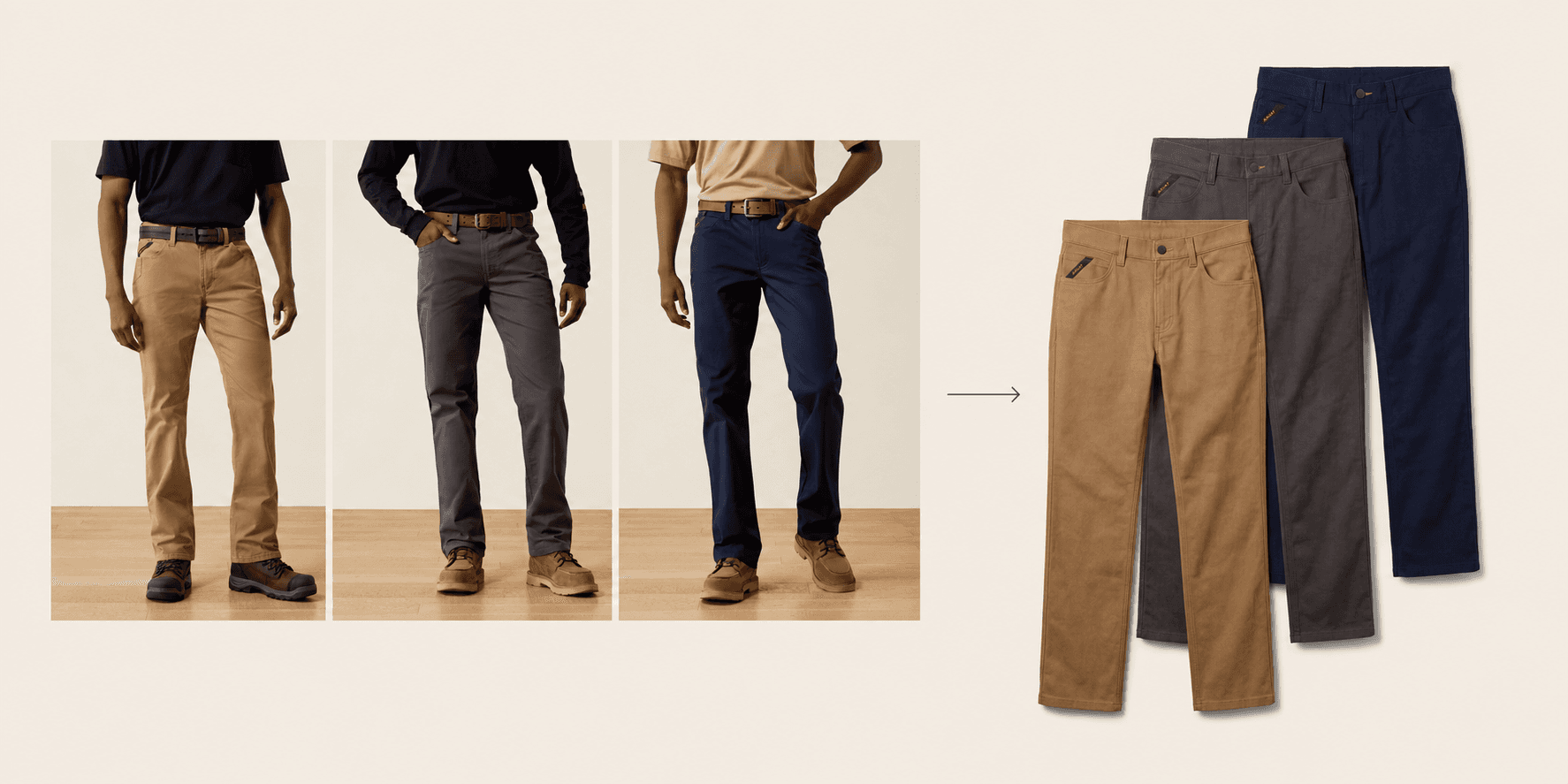
I used the model photography we already had to create the bundle story we needed.
A new bundle image could not depend on a new photoshoot every time Merchandising wanted to test a combination.
I used AI-assisted generation to turn the existing Field Khaki, Rebar Grey, and Dark Navy model shots into one coordinated product image. That gave the experience a clear merchandising asset and created a faster path for future seasonal and category-specific bundles.
07 / PROTECT THE IDEA THROUGH LAUNCH
The best first version was the one the system could actually support.
Promotion logic was the hard part.
Engineering raised valid concerns about percentage discounts, overlapping promotions, and how multiple qualifying products would resolve in the bag.
Make the savings fixed and legible.
I recommended a dollar-off offer for launch. It reduced implementation risk, gave customers a concrete promise, and kept the larger bundle system intact.
08 / MY ROLE
I carried the work from a loose opportunity to a live commerce system.
This was a zero-to-one initiative I personally led. I owned the research, product logic, experience strategy, UX/UI, prototypes, documentation, and the cross-functional work needed to get it launched.
I started with the shopping behavior.
Work customers already replace tees, pants, and layers in multiples. The opportunity was not to invent a new habit. It was to make that habit easier to complete on Ariat.com.
I made it a system, not one special PDP.
The experience needed discovery on the PLP, links from individual products, one place to configure every item, and a bag that could explain the final savings.
I found the launchable version.
Percentage discounts created pricing and promotion complexity. I recommended a clear dollar-off offer so we could protect the customer promise and get the first version live.
THE OUTCOME
The first launch proved there was real demand for a more useful way to buy multiples.
The first 30 days produced $266K across roughly 2,500 orders. What began with eight Work bundles is now expanding into Western, including Mom + Me boot pairings, his-and-hers holiday offers, and more seasonal bundles. Merchandising and Marketing are using the system as an ongoing traffic and campaign tool, not treating it as a one-time launch.